WordPress dominates as a CMS, but most implementations treat it traditionally: one database, one WordPress instance, one website.
Progressive teams are reimagining this architecture.
Beyond the Single Instance
Traditional: One WordPress installation. Content stored locally. Published directly to the internet.
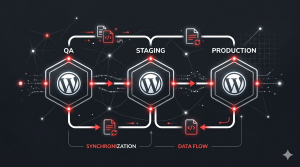
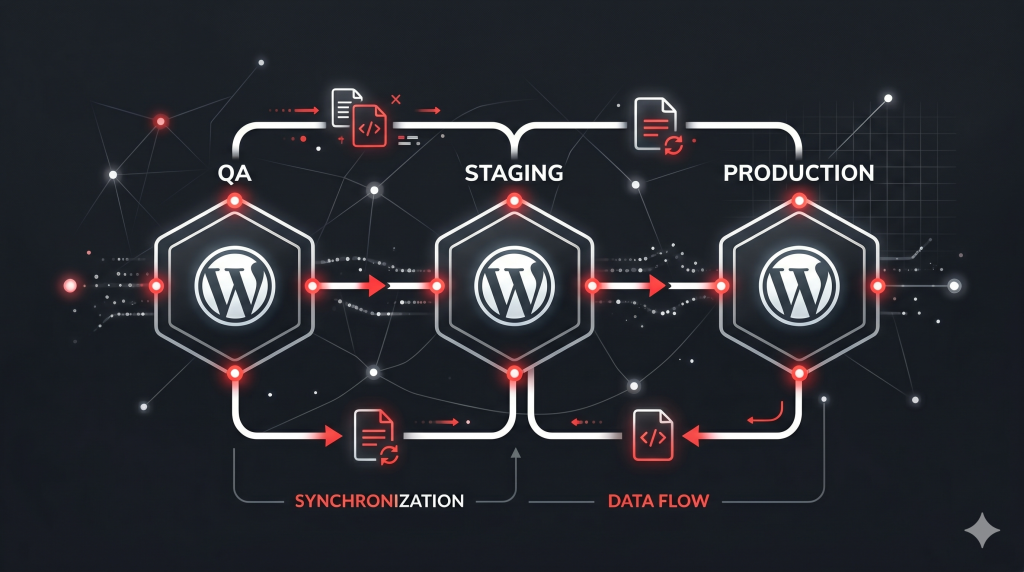
Modern: WordPress as content management layer. Multiple WordPress instances (development, staging, production) sharing structured content. Distributed publishing.
This isn’t headless WordPress (where WordPress serves an API to a separate frontend). It’s multi-instance WordPress—same CMS architecture, multiple environments.
Why Multiple Instances Matter
Testing. Approve content in staging before production sees it. Test new plugins. Preview design changes. Ensure nothing breaks.
Workflow. Separate environments for editors, reviewers, and publishers. Hierarchy of approval.
Collaboration. Teams work simultaneously without stepping on each other.
Rollback. Deploy content confidently knowing you can revert instantly if issues arise.
The API-First Future
Next evolution: environments connected via API. Content pushed from staging to production through structured endpoints. Automatic synchronization. True headless CMS behavior while retaining WordPress familiarity.
This enables:
– Content written once, published everywhere
– Multi-channel distribution (website, email, social)
– Real-time content updates across properties
– Sophisticated approval workflows
Implementation Today
Teams currently implementing this use:
– WordPress Multisite (clunky but functional)
– Custom API connections (powerful, complex)
– Hybrid approaches combining both
The missing piece is unified tooling designed for this workflow. Standardized interfaces for environment connection, content transfer, and deployment.
Looking Ahead
WordPress’s future isn’t as a single-instance CMS. It’s as a scalable content platform for organizations managing content across multiple destinations, environments, and teams.
The systems supporting that future are being built now. Embrace that thinking in your architecture choices today.