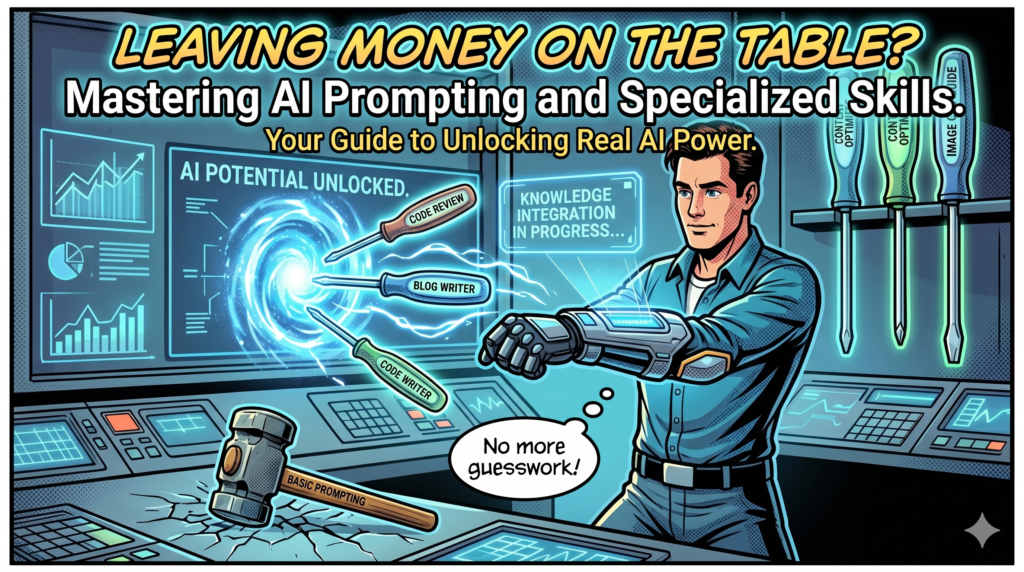
Ever felt like you were leaving money on the table when working with AI? You probably were not because A.I isn’t powerful, but because you didn’t know the secret sauce: good prompting and skills.
Let’s fix that. In this guide, we’ll walk through the fundamentals of both, so you can start getting actually useful results instead of mediocre ones.
What Is Prompting (and Why It Matters)
Prompting is just fancy talk for “telling A.I what to do.” But here’s the thing: how you tell A.I matters way more than you’d think.
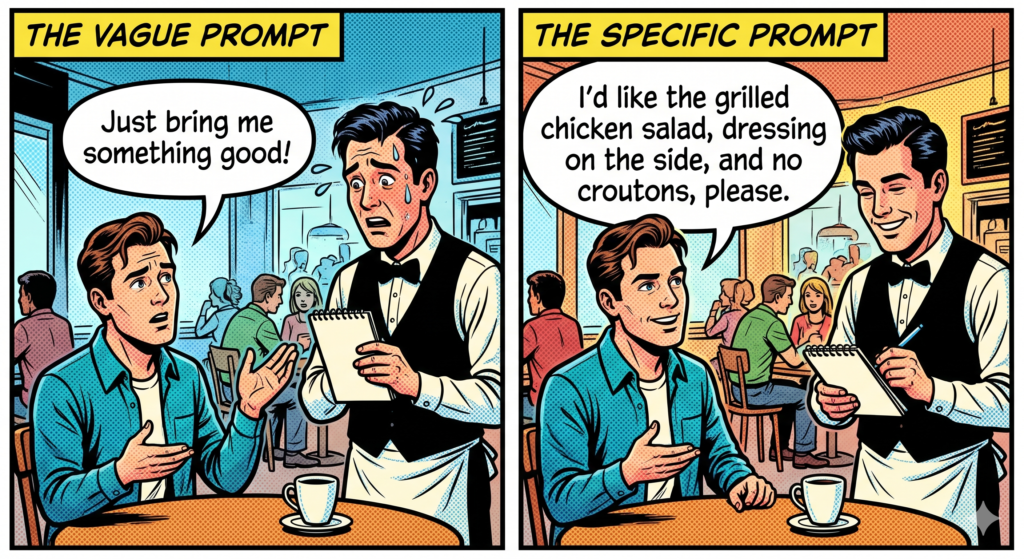
A bad prompt might look like: “Write about marketing.” A good prompt looks like: “Write a 400-word LinkedIn post about sustainable fashion for eco-conscious brands. Use a conversational tone, include one surprising statistic, and end with a call-to-action.”
See the difference? The second one gives A.I actual constraints and direction. You’re not leaving the outcome to chance.
The golden rules of prompting:
- Be specific. Tell A.I what you want, not just the topic.
- Give context. Who’s the audience? What’s the format? What’s the goal?
- Use examples. Show A.I what “good” looks like-it learns fast.
- Break it down. Big tasks get better results when split into smaller steps.
Think of prompting like ordering food at a restaurant. “Give me something good” is vague. “Give me a grilled chicken salad, dressing on the side, hold the croutons” gets you exactly what you want.
Meet Skills: Your AI Shortcut
Now, here’s where it gets fun. Skills are pre-built prompts and workflows that do specific things really well.
Instead of crafting the perfect prompt every time you need to write a blog post, review code, or plan a campaign, you just use a skill designed for that job. It already has the right structure, the best practices baked in, and the context you need.
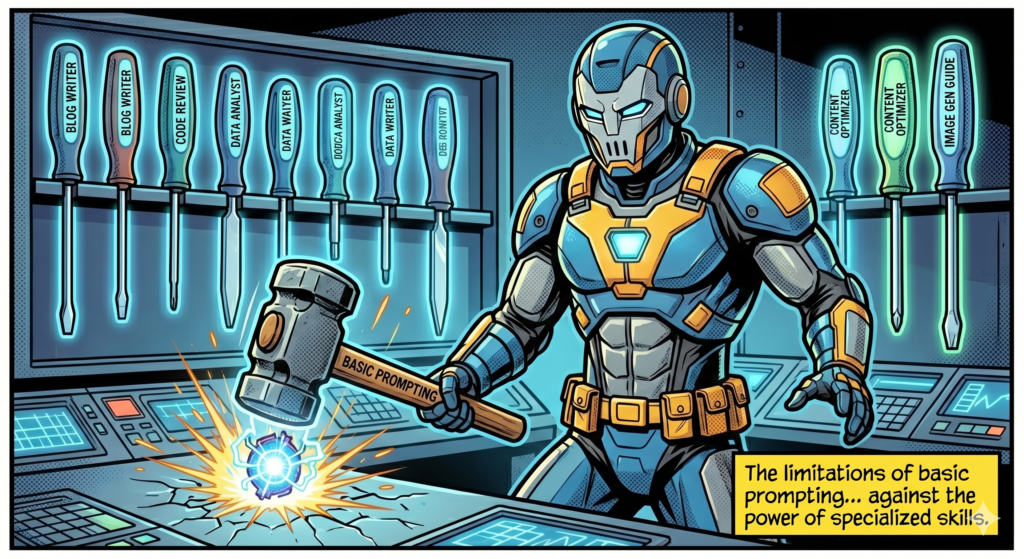
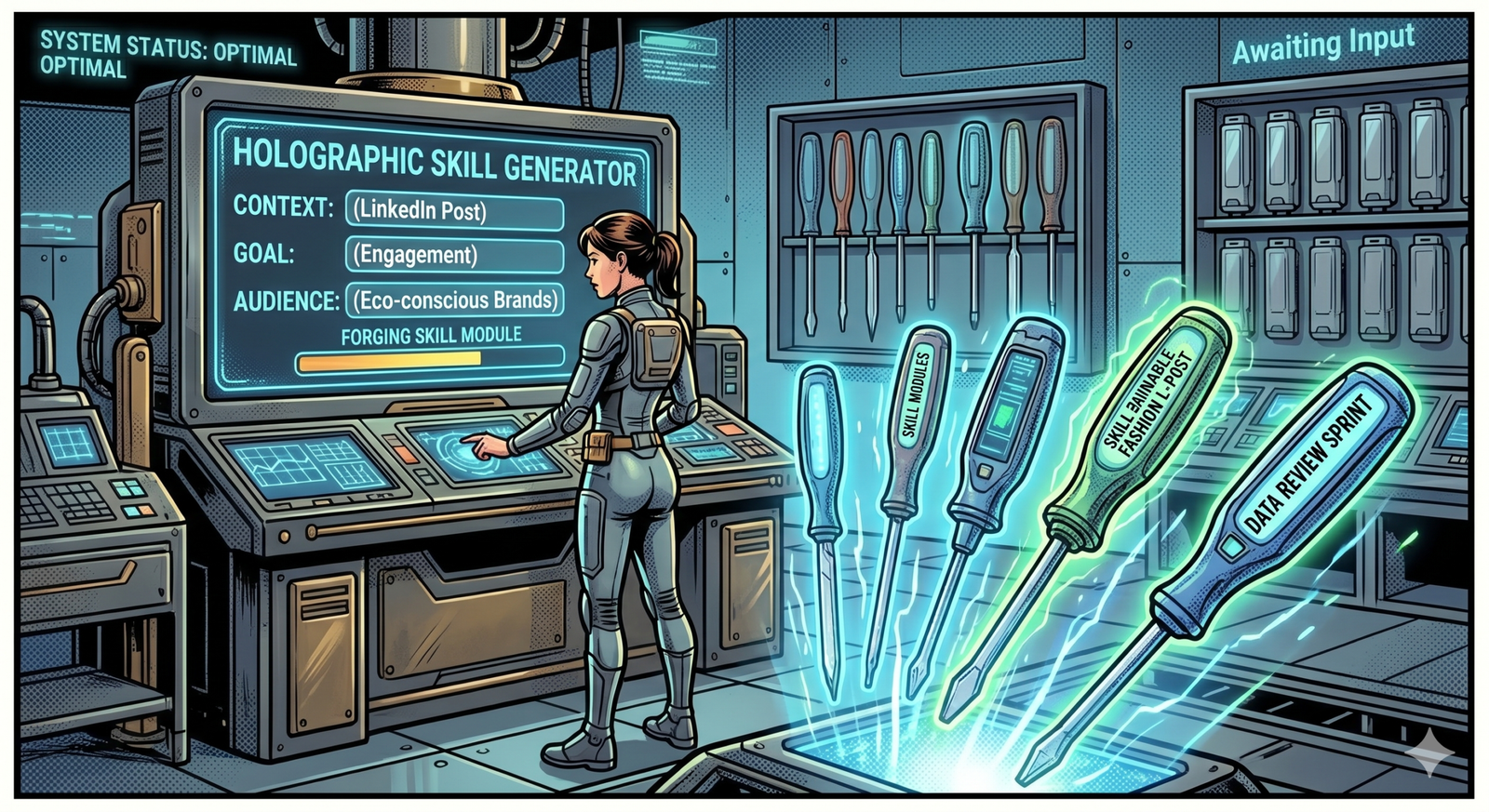
Think of skills as specialized tools instead of a generic hammer. A hammer works for a lot of things, but a screwdriver is better at driving screws.
Some examples of skills you might use:
- Writing skills for different content types (blog posts, emails, social media)
- Analysis skills for reviewing data, competitive intelligence, or research synthesis
- Planning skills for sprints, campaigns, or roadmaps
- Code review skills for catching bugs before they ship
When you use a skill, you’re not starting from scratch. You’re using a template that’s been refined to get the best output for that specific task.
How Prompting and Skills Work Together
Here’s the real magic: skills are prompting, but better. They combine:
- A carefully designed prompt structure
- Best practices for that specific task
- A workflow that handles the details you’d normally forget
When you use a skill, you’re benefiting from someone else’s expertise. You’re essentially hiring a specialist who already knows how to ask the right questions.
Your Next Step
Want to build your own skills or find ones that fit your exact workflow? That’s exactly what the Skill Generator is for-it helps you create custom skills tailored to your needs and your tools.
Check out the Skill Generator →
Start with good prompting habits. Then level up with skills that do the heavy lifting for you. That’s how you go from “good results” to “wait, did AI really just do that?”